
IRIS
Wearable command. Autonomous defense.
Human-supervised targeting and counter-threat operations at machine speed. Detect threats, deploy interceptors and coordinate every system from a single layer of intent.
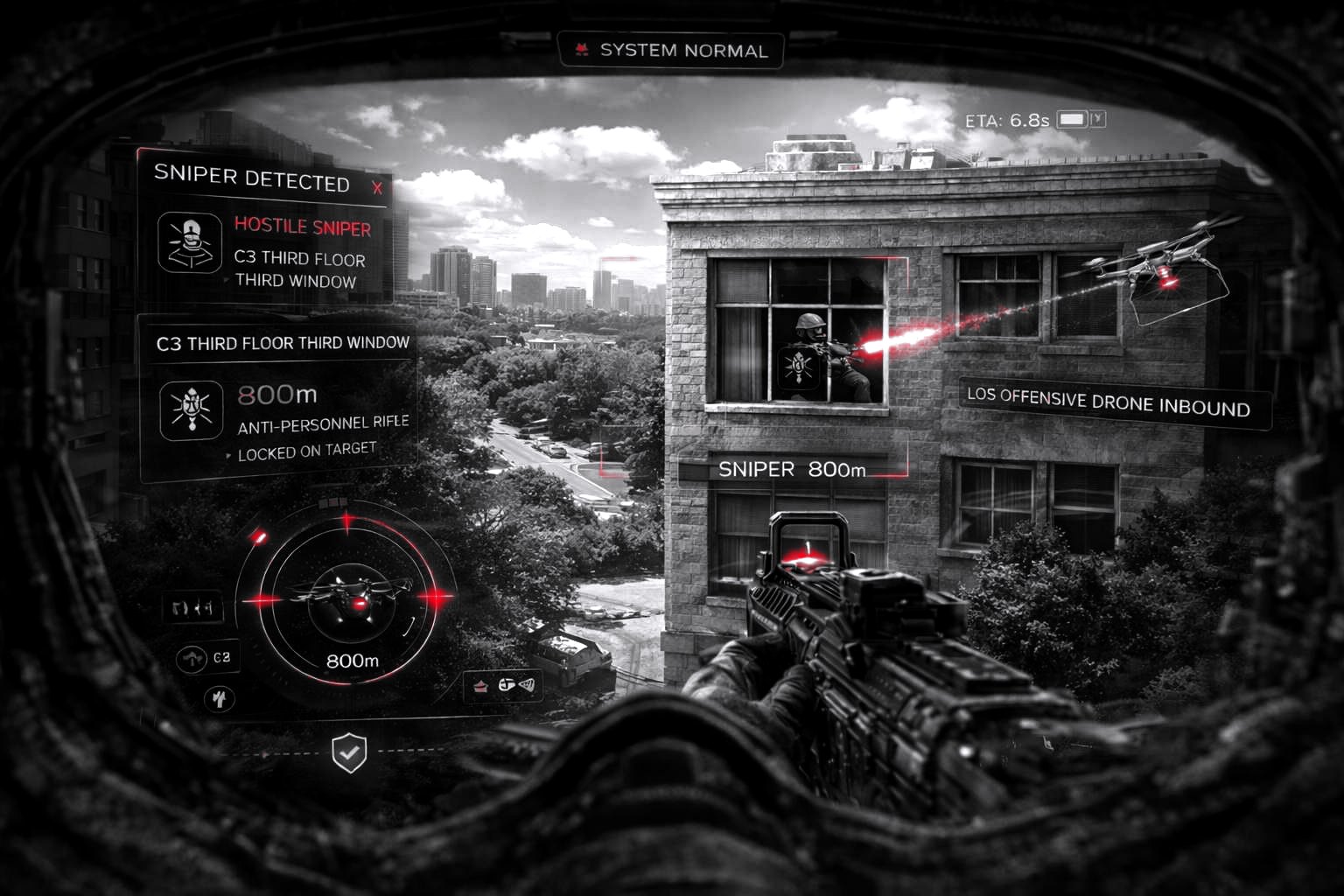 Simulated interface
The platform
One operator interface for every system.
IRIS combines a wearable command interface with the OMNI X orchestration layer. Operators see threats, assets and system status while sensors, drones and other systems share one workflow. The design supports hands-free designation, live telemetry, audit logs and human authorization.
How it works
Six steps. One human decision.
01
Detect
Sensors find a potential threat. It appears in your field of view.
02
Designate
You confirm the threat or select another target with a glance or a gesture.
03
Authorize
OMNI X validates the threat, checks the rules and requests engagement approval.
04
Intercept
An interceptor deploys and pursues the threat autonomously.
05
Continue the mission
You designate other targets or assets. The system keeps working.
06
Fail-safe
If anything fails, you take manual control.
System components
AR glasses interface
Wearable display of threats, assets and system status in real time.
OMNI X orchestration
Fuses data, makes decisions and coordinates autonomous systems.
Counter-UAS interceptors
Autonomous pursuit with non-lethal or kinetic neutralization options.
Manual controller
Direct control when you need it. A human is always in the loop.
Key capabilities
Built for degraded, contested, real conditions.
- Real-time awareness of threats, assets and system status.
- Sensor fusion and threat classification across systems.
- Rules of engagement, authorization and manual control.
- Audit logs and mission replay for review.
- Degraded-mode operation in limited connectivity.
- Multi-target, multi-system control without distraction.
 Simulated interface
Drone alert to authorized intercept.
Development status
Where IRIS is today.
The core engine has been tested end to end in a closed environment using simulated systems. Wearable integration, physical platform validation and customer evaluations are the next milestones. The near-term objective is controlled evaluation readiness across the wearable interface, integrations and operator workflow.